
Europa Disco
To the tune of Italo-disco, Europe is believing in itself with a Campari in hand. And we’re all here for it.

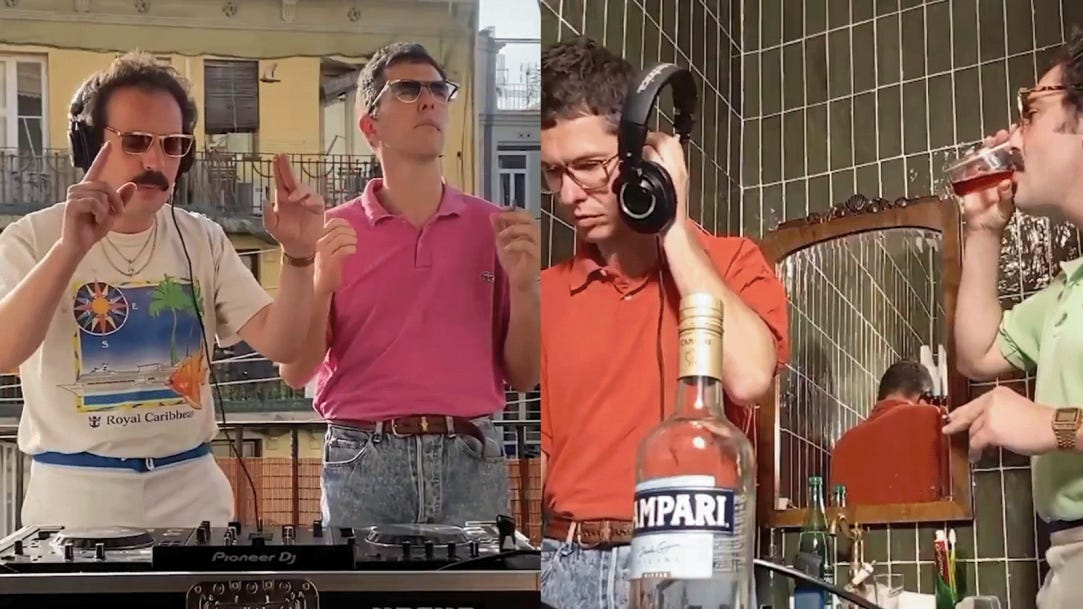
Internet memes are not only making the internet fun but they often act as a kind of distributed consensus mechanism for culture. And the current consensus is that Europe is finding its confidence (back) and with it it, a voice. Last week, the Italian duo Mind Enterprises, whose popularity has been steadily building over the past year, set the internet on fire by becoming the symbol of Europe’s response to the American “threat”.
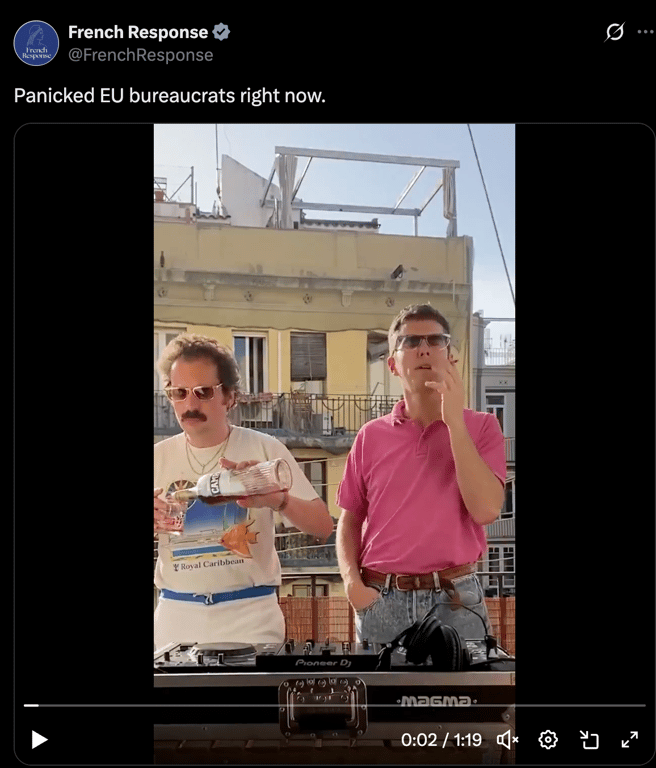
It’s the most visible signal of a shift in how Europe talks about itself and the new tone is a more confident one. Europe is falling in love with itself and its heritage again, not trying to respond to attacks but standing in its own right. We know what we’re capable of, we value what we have, and we’re ready to shape the future we want to see. When a German minister posts 'Europe for sure' riffing on the Macron Davos meme (the other internet sensation of last week), you know something is happening…
The European tech ecosystem is likely to be one of the reasons of this new mood music. We’ve been building great products and companies for decades (ASML, Skype, Adyen, Spotify, Wise, Revolut, Deepmind) and in the the current AI and science revolution, the momentum is only accelerating: Elevenlabs, Synthesia, Legora, Granola, Isomorphic Labs, etc. What’s particularly exciting about these companies is not only their success or their leadership but how they talk about themselves, offering a vision of tech and company building “made in Europe”. Watch the excellent Thinking Game documentary for the strongest illustration of this subtle but powerful “vibe shit”.
This matters because when a nation, ecosystem or industry reaches a certain level of maturity and confidence, they start layering their own culture on their technological capabilities. The analogy I’been using here when describing this to people is China and its luxury industry: they started by manufacturing luxury goods for the western companies, then buying these goods themselves, becoming the largest consumer market for it, and now they want to define luxury. Chinese brands like Laopu Gold and Songmont are outpacing their Western competitors.
If Europe can align its innovation potential with a story it genuinely believes in that is neither borrowed, nor defensive, then the prophecy starts to write itself. And it is being written, right now, across Substack, X, LinkedIn, and a growing chorus of podcasts. The EU Inc campaign going from grassroots to the top of Ursula von der Leyen’s agenda, the rapid rise of Project Europe fuelling the ambition of the next generation of founders, and a flurry of new podcasts, content creators or X accounts emerging every week and putting their own European flavour on the tech discourse: SoTa letters, Scaling Europe, the Anglofuturism podcast, UK 2.0 . My latest personal favourite is À la French where they tackle global tech trends and Silicon Valley buzzwords in French, with distinctively European flair, balancing engineering rigour and humour. Their intro says it all: a plane takes off from SF and lands in Europe. This show is a prime example of Europe moving from passive consumer to authoritative critic of technology. Europe’s own narrative is multicultural, fragmented, but incredibly rich. Just as the world is.
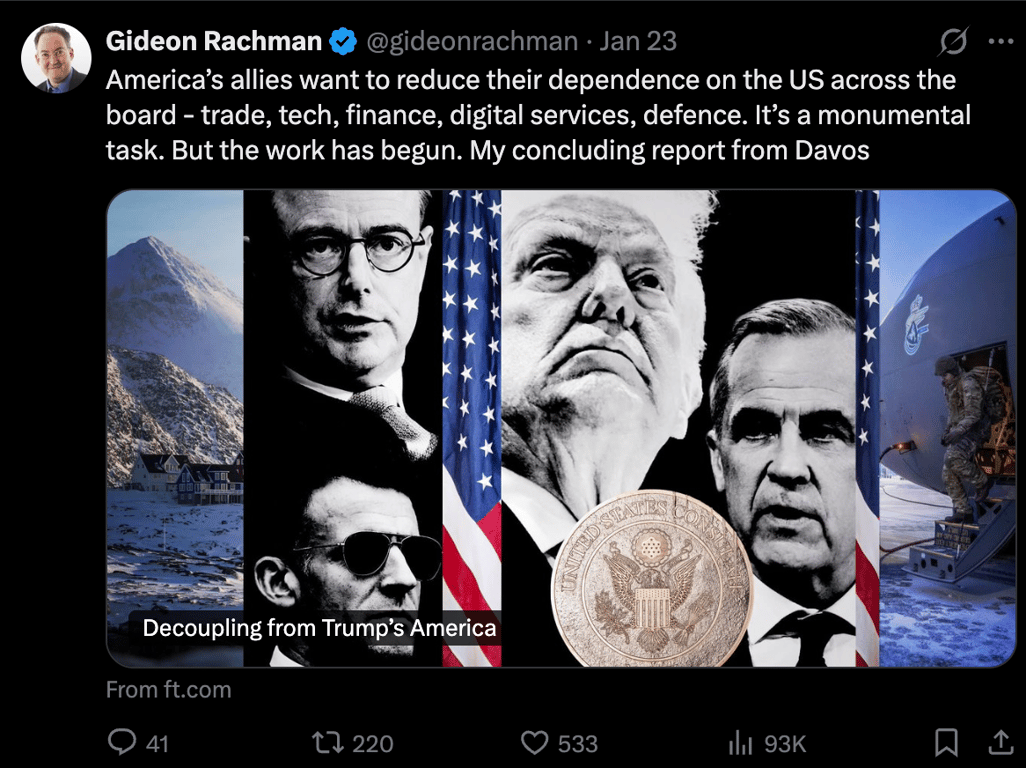
The moment couldn’t be better; not just for the innovation economy but for Europe in general with the new geopolitical realities of the rapidly changing world-order. While internet memes are fun and effective, stakes are high and the scale of the challenges ahead are not to be underestimated. Europe’s winning cultural narrative is a question of possibility AND necessity. The excellent Davos report from Gideon Rachman in the latest FT weekend edition summarises the global situation well. In it, he quotes Arthur Mensch, CEO of Mistral: “the biggest risk in the coming years for Europe is that we become a colony in AI”, which could lead to “95 per cent of digital services and AI being imported from the US. (..) the development of AI also gives Europe an opportunity to significantly decrease its dependence on American technology because it will give rise to new ways to develop software and digital services.”
A confident European narrative is not chest-pumping but a vision to build and invest towards. As we wrote in our Total Football essay last year, Europe has the talent and ingredients to thrive. “Fo shur”, we need more ambitious industrial policies, supportive regulatory frameworks, and institutional capital from early-stage to scale-up. All of these are in progress making the cultural narrative the last piece of the puzzle and the ingredient that accelerates everything else. When people start to believe, every decision becomes easier: the young founder inspired by UK-made satellites being launched into space, the talent deciding their next career move, the policymaker trying to have a long-lasting impact, the VC betting on the future, the asset manager seeing innovation at scale as a significant contribution to their performance and the returns they can generate for pensioners.
So grab a Campari, put on some Italo-disco, dream and build.
Love the European disco energy!!!
Love it.